
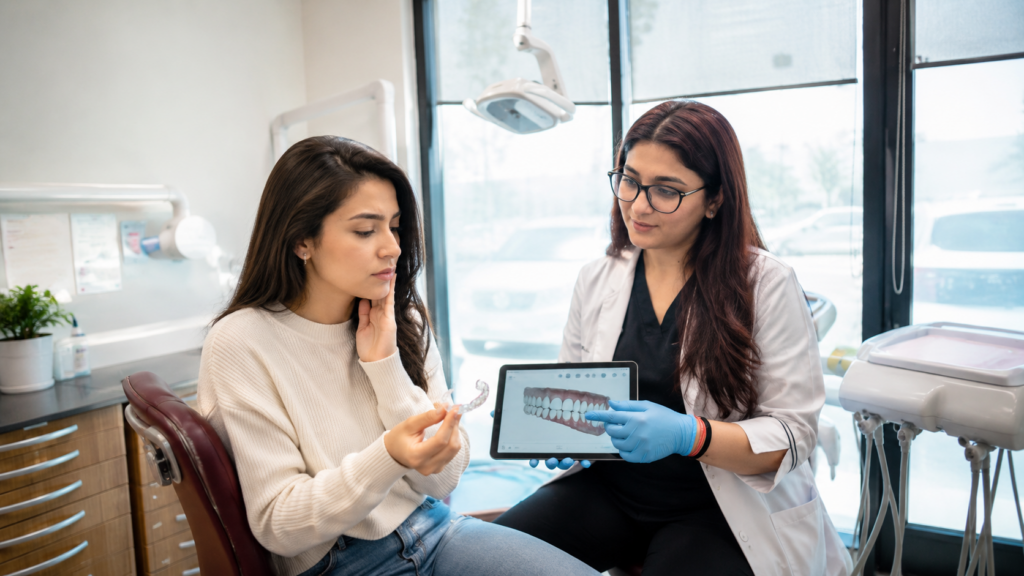
Invisalign aligners are designed to be worn 20 to 22 hours a day, and falling short of that consistently causes teeth to drift back toward their original position between changes, which can prevent the next aligner in the series from fitting properly. If wear time has slipped, an Invisalign consultation can assess where treatment stands and what’s needed to get it back on track.
Invisalign works by applying gentle, continuous pressure to gradually move teeth into position, and that word, continuous, is doing a lot of work. Unlike fixed braces, aligners can be removed, which makes them convenient, but it also means results depend heavily on how consistently they’re actually worn.
How Many Hours a Day You Actually Need to Wear Them
The clinical standard for Invisalign is 20 to 22 hours of daily wear, with aligners removed only for eating, drinking anything other than water, and brushing or flossing. Some flexibility exists below 22 hours, but wear time consistently below about 18 hours a day is generally where treatment effectiveness starts to noticeably decline. The exact number matters less than consistency; wearing aligners close to the recommended range every day produces better results than wearing them for the full 22 hours some days and far less on others.
What Happens When Aligners Aren’t Worn Enough
Tooth movement during Invisalign treatment relies on the periodontal ligament, the tissue that holds each tooth in its socket, gradually remodeling as steady pressure is applied. When an aligner is out of the mouth for too long, that ligament begins pulling the tooth back toward its previous position. If this happens repeatedly, the tooth doesn’t fully reach the position the current aligner was designed for, which means the next aligner in the sequence may not seat properly, fitting tightly over some teeth while gapping over others.
Why a Poorly Fitting Aligner Is a Warning Sign
An aligner that doesn’t snap into place cleanly usually means the teeth haven’t moved as far as planned, most often due to insufficient wear time. Continuing to force an aligner that doesn’t fit well isn’t an effective fix and can create uneven pressure that doesn’t move teeth as intended. This is generally the point where a dentist needs to reassess and determine whether more time is needed with the current aligner or whether new impressions and refinement aligners are necessary.
How Compliance Affects Your Overall Timeline
Patients who wear their aligners consistently within the recommended range typically finish treatment on or close to the original projected timeline. Patients with ongoing compliance gaps often need refinement aligners, an additional set created partway through treatment to correct for movement that didn’t happen as planned, which can extend total treatment time noticeably, sometimes by many months beyond the original estimate. The first two to three months of treatment tend to be a useful indicator of how the rest of treatment will go, since early wear habits are a fairly reliable predictor of overall compliance.
Common Reasons Wear Time Slips
Eating and drinking are the most common reason aligners come out more than intended, since anything other than water requires their removal. Social situations, forgetting to put aligners back in after a meal, and discomfort during the first day or two of a new aligner are other common culprits. Traveling, illness, and simply losing track of time while an aligner is out for a meal are also common, less obvious contributors to missed wear time. Being aware of these patterns can help build habits, like keeping the aligner case with you and setting a reminder after meals, that make it easier to stay closer to the recommended wear time.
Getting Treatment Back on Track
If wear time has slipped and an aligner isn’t fitting the way it should, the right move is to bring it up at your next appointment, or sooner if it’s been an ongoing issue, rather than trying to push through on your own. Depending on how much movement was missed, your dentist may recommend staying on the current aligner longer before moving to the next one, or taking new scans to generate refinement aligners that account for where your teeth actually are now. Addressing this early generally requires less adjustment than waiting until multiple aligners have been affected.
What Happens After Treatment Is Complete
Once active treatment finishes, retainers are used to hold teeth in their new position, and the same wear-time principle applies here in a different form: teeth can still shift after treatment if retainers aren’t worn as directed, particularly in the first year. Most patients move to a schedule of nightly retainer wear after an initial period of more consistent use, and skipping this step is one of the more common reasons results don’t hold over time.
Keeping Your Teeth and Aligners Clean During Treatment
Wear time isn’t the only habit that affects how Invisalign treatment goes. Because aligners sit directly against the teeth for most of the day, plaque and food particles trapped underneath them can accelerate decay and gum irritation if oral hygiene slips during treatment. Brushing and flossing before reinserting aligners after every meal, rather than just at your normal morning and evening routine, keeps this from becoming a problem. Maintaining your regular dental hygiene visits throughout treatment is also worth keeping up, since your hygienist can flag any early issues with gum health or plaque buildup around the aligners before they become bigger problems.
Talking to Your Dentist About Compliance Honestly
It’s common for patients to feel hesitant to admit they haven’t been wearing their aligners as much as recommended, but this information genuinely changes how your dentist approaches your remaining treatment. Being upfront at a progress check, rather than letting a dentist discover a fit problem without context, generally leads to a faster, more accurate fix. If you’re unsure where your treatment currently stands, booking a check-in is a straightforward way to get an honest read on your progress and a clear plan for finishing on the best possible timeline.
FAQs
How many hours a day should I wear Invisalign?
Invisalign is designed to be worn 20 to 22 hours a day, removed only for eating, drinking anything other than water, and brushing or flossing.
What happens if I don’t wear my Invisalign enough for one day?
An occasional missed hour or a single lower-wear day is unlikely to significantly affect treatment, but consistent shortfalls over time can cause teeth to drift back and affect how well the next aligner fits.
Can not wearing Invisalign enough ruin my results?
It can extend your treatment timeline and, in more significant cases, require refinement aligners to correct for movement that didn’t happen as planned, but it doesn’t typically undo progress already made.
What does it mean if my new aligner doesn’t fit?
This usually means your teeth haven’t moved as far as the aligner was designed for, most often due to insufficient wear time. It’s worth contacting your dentist rather than continuing to force it.
How do I know if I need refinement aligners?
Your dentist determines this based on how your teeth have tracked against the treatment plan, typically identified during a progress check when an aligner isn’t fitting properly.
Does eating with Invisalign in damage the aligners?
It’s generally recommended to remove aligners before eating anything other than water, both to protect the aligners from damage and to avoid trapping food against the teeth.
How long can Invisalign treatment be extended by poor compliance?
This varies by case, but treatment that was originally projected at around 12 to 14 months can extend well beyond that, sometimes significantly, if wear time has been consistently inconsistent.
Do I need to wear a retainer forever after Invisalign?
Most dentists recommend nightly retainer wear indefinitely to prevent teeth from gradually shifting back, since teeth can continue to move throughout life even after orthodontic treatment is complete.
Is it too late to fix things if I’ve been inconsistent with my aligners?
No. Bringing it up with your dentist as soon as possible allows treatment to be adjusted, whether that means extending time with a current aligner or generating new ones, with less overall delay than waiting.