
Key takeaways
- A root canal removes infected or injured pulp from inside a tooth and is usually done in one or two appointments.
- Local anesthesia numbs the area during treatment, which is why most people feel pressure rather than sharp pain.
- Most root canals take about 60 to 90 minutes, and a crown is often needed afterward to protect the tooth.
- A root canal does not protect the tooth from new cavities or gum disease, so ongoing care still matters.
- Tenderness for a week or two after treatment is common and usually settles as the tooth heals.
During a root canal, a dentist numbs the tooth, removes infected or damaged pulp from inside it, cleans and seals the space, and places a temporary filling until a permanent restoration is ready. Because the tooth is numbed first, the treatment is designed to relieve pain rather than cause it. Most root canals take one to two visits and about 60 to 90 minutes each.
What Happens During a Root Canal: The Short Answer
Root canal treatment, also called endodontic treatment, clears out the pulp inside a tooth when it has become infected, injured or has started to die. Your dentist cleans out the inside of the tooth using very fine instruments, disinfects the space, fills it with a rubber-like material, and seals the tooth. The Canadian Dental Association notes this can usually be done by a general dentist, depending on the case.
Most people are told they need a root canal after a dentist finds deep decay, a crack, or an infection near the tooth’s root, often during an exam for tooth pain. If you are reading this because you were just told you need one, the next sections cover exactly what the appointment involves.
Why a Root Canal Is Needed in the First Place
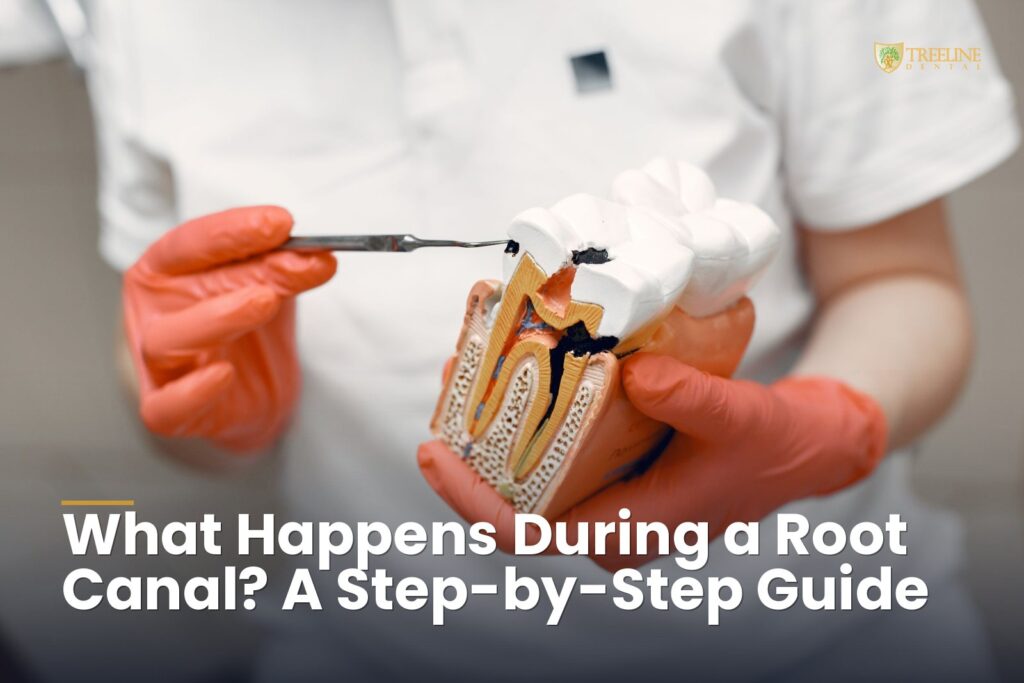
Inside every tooth is a soft core called the pulp, made up of nerves and blood vessels. When bacteria reach the pulp, through a deep cavity, a crack, or an old filling that has failed, the pulp can become inflamed or infected. Left alone, the infection can spread and the tooth may eventually need to be removed.
A root canal is the treatment that tries to save the tooth instead of taking it out. Mayo Clinic explains that the alternatives are removing the tooth with no further treatment, or removing it and replacing it with an implant, bridge, or removable partial denture. Whether a root canal makes sense for your tooth depends on things like how much healthy structure is left and where the tooth sits in your mouth, which is why an exam and X-ray come before any treatment plan.
Root Canal Steps: What Happens in the Chair
Different clinics describe the sequence slightly differently, but the core steps match closely across Cleveland Clinic and the American Association of Endodontists. Here is the typical order.
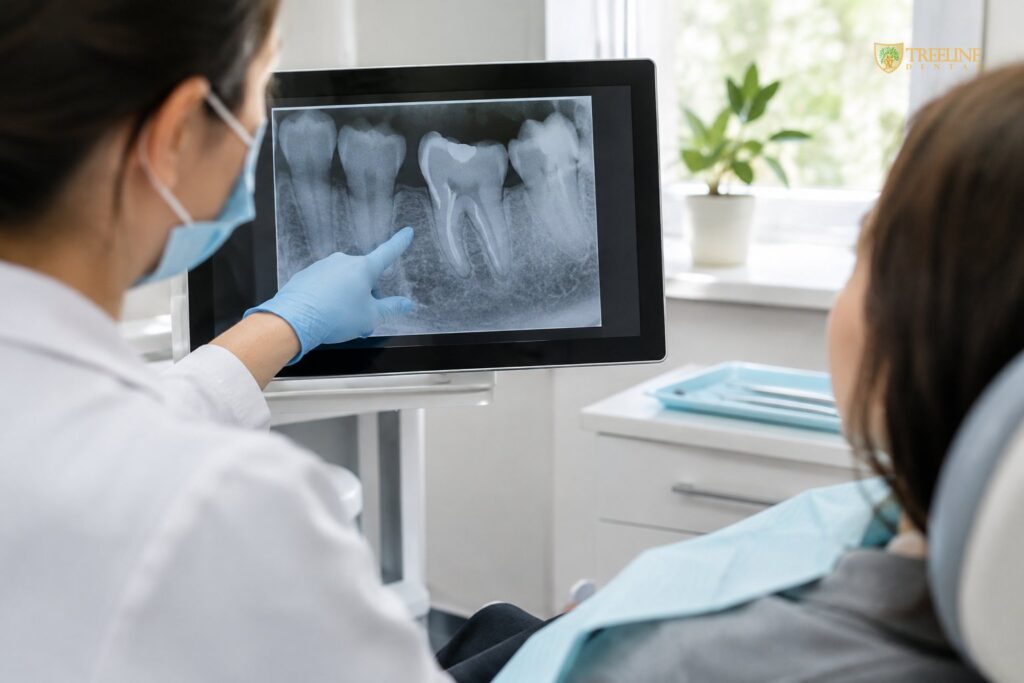
- X-ray and exam. Your dentist takes an X-ray to see the shape of the root and whether infection has reached the bone around it.
- Numbing. A local anesthetic numbs the tooth and the surrounding gum, so you should not feel pain during the procedure.
- Dental dam placement. A thin sheet of rubber, called a dental dam, is placed around the tooth to keep it clean and dry and to keep saliva and bacteria away from the work area.
- Accessing the pulp. A small opening is made in the top of the tooth to reach the pulp chamber.
- Removing the pulp. Using very fine instruments, the dentist removes the infected or damaged pulp from inside the tooth and the root canals (the narrow channels running down into the root).
- Cleaning and disinfecting. The inside of the tooth and each canal is cleaned and shaped, and may be treated with an antibacterial solution.
- Filling the canals. The empty space is filled with a rubber-like material that seals the canals against future infection.
- Temporary filling or sealing. A temporary filling protects the tooth until a permanent restoration, often a crown, can be placed.
This full sequence is usually completed in one or two appointments, and the CDA confirms that root canal treatment may be done in one or two visits, depending on the tooth and how much infection is present.
Is a Root Canal Painful? What the Numbing Actually Does
This is the question almost everyone asks once they are told they need the treatment. The honest, plain answer: the local anesthetic numbs the tooth and gum before any work begins, so you should not feel pain during the procedure itself. Most of what people describe as uncomfortable is pressure or vibration, not pain, since the area is numb.
What can follow afterward is some tenderness. The CDA notes that your tooth may be tender for the first week or two after treatment, and Mayo Clinic similarly says the tooth may feel sensitive for the first few days. This is a normal part of healing as the tissue around the tooth settles, not a sign that something went wrong. If swelling, fever, or pain gets worse rather than better over those days, that is a reason to call your dentist rather than wait it out.
One important note on scope: facial swelling that affects your breathing or swallowing is a medical emergency. Go to the nearest emergency room or call 911 rather than waiting for a dental appointment.
Can I Eat and Drive Afterward?
Most root canals use local anesthetic only, meaning you stay awake and aware throughout, and you can typically drive yourself home and go about ordinary activities once the appointment is over. You can eat normally before the appointment. After treatment, it is sensible to wait until the numbness wears off before eating, so you do not accidentally bite your cheek or tongue, and to avoid very hard or chewy foods on that tooth for a few days while the temporary filling is in place.
Root Canal vs. Other Options: A Quick Comparison
When a tooth is badly damaged or infected, there is usually more than one path forward. The table below lays out how a root canal compares with the main alternatives, based on Mayo Clinic’s overview.
| Option | What it involves | What it does not do |
|---|---|---|
| Root canal treatment | Removes infected pulp, cleans and seals the canals, followed by a crown or filling to restore the tooth | Does not protect the tooth from future cavities or gum disease; the tooth still needs regular brushing, flossing and checkups |
| Extraction with no replacement | Removes the tooth entirely | Leaves a gap that can affect chewing and the position of neighbouring teeth over time |
| Extraction with replacement | Removes the tooth and replaces it with a dental implant, bridge, or removable partial denture | Involves its own separate healing process and planning, and is not a same-day fix |
Whether a root canal is the right choice for your tooth, versus extraction, depends on factors like how much healthy tooth structure remains and the condition of the surrounding bone. This is exactly the kind of decision that needs an in-person exam rather than a guess from a description alone.

After the Root Canal: Recovery and the Crown
Once the canals are filled and sealed, most teeth still need a permanent restoration to protect what is left of the tooth and let it function normally again. A tooth that has had a root canal is more brittle than before, since removing the pulp also removes its blood supply, so a crown is often recommended to cover and strengthen it. Cleveland Clinic describes this as the step that protects the tooth and restores your bite, and it is usually done at a separate visit once the tooth has settled.
In the days right after treatment, expect:
- Mild tenderness or sensitivity around the tooth, usually easing within one to two weeks
- A temporary filling in place until the permanent restoration is ready
- A follow-up visit to check healing and place the crown or permanent filling
It is worth repeating what a root canal will not do: it does not make a tooth immune to new decay or gum disease. The CDA is clear that root canal treatment does not protect your tooth from other types of damage, so ongoing brushing, flossing, and regular checkups still matter for that tooth just as much as any other. In most cases a treated tooth can be saved long-term, though in some rare situations a second root canal treatment, or occasionally a root canal surgery, is needed if the first treatment does not fully resolve the issue.
What If I’m Too Anxious to Book the Appointment?
Feeling nervous before a root canal is common, and often comes from stories or assumptions rather than the procedure itself. A few things tend to help:
- Asking your dentist to explain each step as they go, in plain language, before they do it
- Telling the team in advance that you feel anxious, so they can pace the appointment accordingly
- Understanding that the numbing is specifically there to prevent pain during the work
- Knowing what to expect afterward, so tenderness in the following days does not feel alarming
If pain brought you to this article in the first place, particularly pain that is worse at night or won’t settle, it is worth reading about what tooth pain that worsens at night can mean and whether it points to something needing urgent attention.
How Treeline Dental Approaches Root Canal Treatment
At Treeline Dental in North York, Dr. Kreena Patel, a general dentist with more than 10 years of experience, treats root canals as a routine part of general dental care, with each step explained in plain language before it happens. Dr. Patel has also completed an advanced surgical course in oral surgery through the University of Toronto, which supports her broader clinical approach to care involving the teeth and surrounding tissue. The clinic is located at 521 Wilson Ave, North York, and serves patients from Downsview, Bathurst Manor, Lawrence Manor, and Wilson Heights, including same-day emergency appointments when available for tooth pain or infection.
If you have been told you need a root canal, or you are dealing with tooth pain and are not yet sure what is causing it, the next step is an exam rather than guesswork. You can read more about the clinic’s approach to root canal and restorative care on the Treeline Dental blog, or call 416-636-5255 to book a visit and get a clear answer about your own tooth.
Questions people ask
What happens during a root canal, in simple terms?
The dentist numbs the tooth, removes the infected or injured pulp from inside it, cleans and shapes the space, fills it with a rubber-like material, and seals the tooth. A temporary filling is placed, and a permanent restoration such as a crown usually follows at a later visit. The Canadian Dental Association describes this as a routine procedure that can usually be done by a general dentist.
Does a root canal hurt?
The tooth and surrounding gum are numbed with local anesthetic before any work starts, so you should not feel pain during the treatment itself. Most people describe pressure or vibration rather than pain. Some tenderness for a week or two afterward is common and is part of normal healing, according to the Canadian Dental Association.
How much does a root canal cost in Ontario?
Root canal fees in Ontario vary by tooth and case complexity, and most single root canals are quoted somewhere between roughly $600 and $1,600. Ontario has no fixed dental fee schedule, so the exact cost depends on the clinic and the tooth involved. An exam is the only way to get an accurate estimate for your own situation.
Is there any downtime or risk after a root canal?
Most people return to normal activities the same day, since root canals typically use local anesthetic only and you remain awake and alert throughout. Mild tenderness or sensitivity for a few days to two weeks is common. A root canal does not protect the tooth from future cavities or gum disease, so regular brushing, flossing and checkups still matter.
Is a crown always needed after a root canal?
Not always, but it is common. A tooth that has had a root canal loses its blood supply and can become more brittle, so a crown is often recommended to protect and strengthen it, especially for back teeth that handle more chewing force. Whether you need one depends on how much natural tooth structure remains, which your dentist can assess at a follow-up visit.
How many visits does a root canal take?
Most root canals are completed in one or two appointments, each lasting about 60 to 90 minutes, depending on the tooth and how much infection is present. A follow-up visit is usually needed afterward to check healing and place a permanent crown or filling.
Sources: Canadian Dental Association · Root canal treatment – Mayo Clinic · Root Canal: Procedure & Recovery · Root Canal Explained: Step-by-Step Treatment Guide – AAE · Root Canal Cost in Ontario 2026: $600 to $1,600 by Tooth Type