
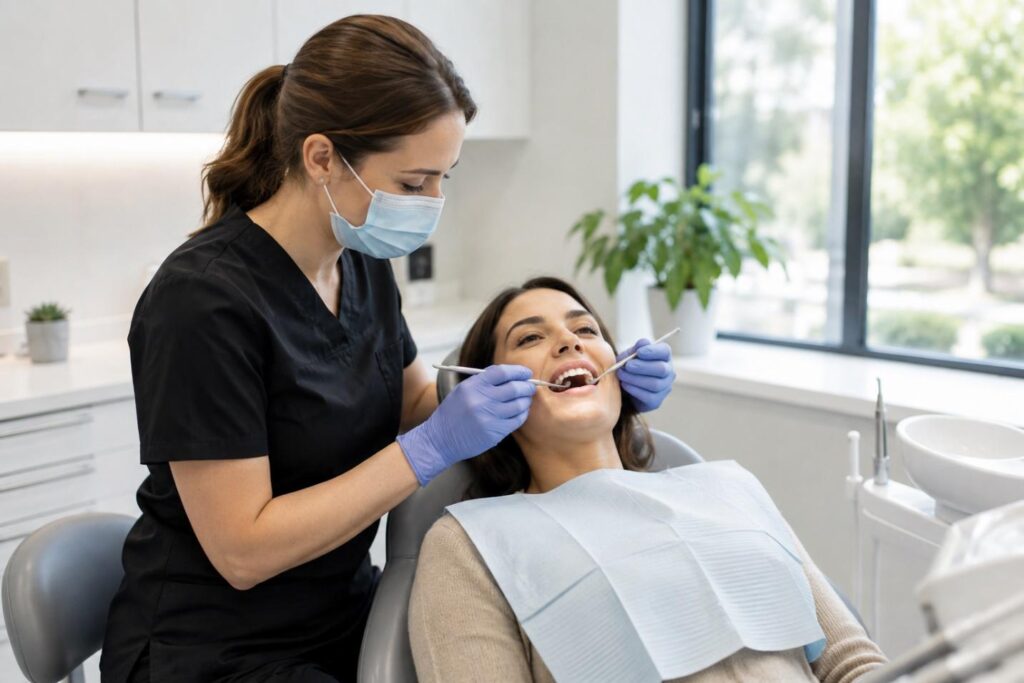

Most patients need a professional dental cleaning every six months, though people with gum disease, diabetes, or braces often need visits every three to four months. Treeline Dental’s dental hygiene team in North York, ON builds a custom recall schedule based on your gum health and risk factors rather than a one-size-fits-all rule. Contact Treeline Dental to book your next cleaning and keep plaque and tartar under control.
How Often Should You Get a Dental Cleaning?
The standard recommendation is a professional dental cleaning every six months. This baseline works well for patients with healthy gums, no history of periodontal disease, and no major risk factors. A six-month cleaning gives your dental hygiene team enough time to remove plaque and tartar before it hardens into deposits that home brushing and flossing simply cannot reach.
That said, six months is a starting point, not a fixed rule. Your dentist will adjust your recall interval based on what they see at each visit, which is why the “right” frequency looks different from patient to patient.
Dental Cleaning Frequency in North York, ON: Who Needs More Frequent Visits
A number of factors can shorten the interval between cleanings from six months down to every three or four months:
- A history of gum disease, which often requires ongoing periodontal maintenance every three months
- Smoking or tobacco use, which accelerates plaque and tartar buildup
- Diabetes, which increases the risk of gum infection and slower healing
- Pregnancy, since hormonal changes can make gums more prone to inflammation
- Active orthodontic treatment, including braces and Invisalign, where hardware makes plaque harder to remove
- A naturally higher tendency to build up tartar, regardless of home care
If any of these apply to you, it is worth discussing a shorter recall interval at your next appointment rather than defaulting to the standard six months.
Common Habits That Affect How Often You Need a Cleaning
Beyond medical risk factors, everyday habits play a real role in how quickly plaque and tartar build back up between visits. Frequent snacking on sugary or starchy foods gives bacteria more fuel throughout the day, while inconsistent brushing and flossing leaves more plaque behind for it to harden into tartar. Diet, hydration, and even mouth breathing (which dries out saliva’s natural cleansing effect) all factor into how quickly your mouth changes between appointments. Your hygienist will often flag these patterns during your visit and suggest small, practical adjustments, rather than simply telling you to “brush better,” so you understand exactly what to change and why it matters for your specific mouth.
What Happens During a Professional Dental Cleaning?
A professional cleaning goes well beyond what a toothbrush and floss can achieve at home. During your visit, our hygienist will:
- Scale away hardened plaque and tartar from above and below the gumline
- Polish your teeth to remove surface stains and smooth away plaque-attracting texture
- Floss thoroughly between every tooth
- Apply fluoride treatment when appropriate to strengthen enamel
Only professional tools can remove tartar once it hardens, which is the main reason cleanings cannot simply be replaced by better brushing at home.
Signs You May Need a Cleaning Sooner
Between scheduled visits, certain signs suggest you should not wait for your next recall date:
- Gums that bleed when you brush or floss
- Swollen, red, or tender gums
- Visible tartar buildup near the gumline
- Persistent bad breath that does not improve with brushing
- Teeth that feel loose or shifting
- Increased tooth sensitivity to hot or cold
Any of these signs are worth a call to your dental team rather than waiting out the calendar.
What Happens If You Skip Regular Cleanings?
Skipping cleanings allows plaque to harden into tartar, which irritates the gums and leads to gingivitis, an early and reversible form of gum disease. Left untreated, gingivitis can progress into periodontitis, a more serious infection that damages the bone and tissue holding your teeth in place, and can ultimately lead to tooth loss. Beyond gum health, untreated plaque and tartar also contribute to cavities that later require fillings, crowns and bridges, or even root canal treatment, all of which cost more time and money than routine restorative dentistry prevention would have.
Dental Hygiene Services in North York, ON
Treeline Dental’s dental hygiene services cover routine cleanings, periodontal maintenance for patients managing gum disease, fluoride treatments, and personalized home-care guidance. Our hygiene team works alongside your dentist so any early warning signs, from bleeding gums to bite changes, are caught and addressed before they turn into bigger problems.
Can Bad Breath Signal You Need a Cleaning Sooner?
Persistent bad breath (halitosis) that does not improve with brushing, flossing, and mouthwash is frequently a sign of bacteria trapped in plaque and tartar below the gumline, areas a toothbrush cannot fully reach. While bad breath can also come from diet, dry mouth, or certain medical conditions, it is worth ruling out a hygiene-related cause first, since it is one of the most straightforward issues to resolve. If a professional cleaning does not resolve ongoing bad breath, your dentist can help investigate other possible causes rather than leaving you guessing.
How Dental Cleanings Fit Into Your New Patient Exam
If you are new to Treeline Dental, your first cleaning is usually combined with a complete evaluation. Our guide on what to expect at your new patient dental exam walks through the full first-visit process, including X-rays and an oral cancer screening, so you know exactly what your appointment will include.
Caring for Kids' and Teens' Teeth Between Cleanings
Children and teens benefit from the same six-month rhythm, paired with age-appropriate home care guidance. Our pediatric dentistry team focuses on making cleanings comfortable and low-stress for younger patients, and if your teenager is in orthodontics or Invisalign treatment, more frequent hygiene visits help keep brackets, wires, or aligners free of plaque buildup.
How Age and Life Stage Affect Cleaning Frequency
Cleaning frequency also shifts across different life stages. Young children usually start with cleanings every six months once their teeth begin to erupt, alongside guidance for parents on brushing technique and diet. Teenagers in braces or Invisalign often move to more frequent hygiene visits, since brackets, wires, and aligner trays all create extra surfaces for plaque to hide. Older adults may need more frequent care too, particularly if they take medications that cause dry mouth, since reduced saliva flow allows plaque and bacteria to build up faster. Rather than treating every patient the same, your dentist adjusts your recall schedule as your life stage and risk factors change over time.
Cost of Dental Cleanings in North York, ON and Insurance Coverage
The cost of a professional cleaning depends on factors like whether it is a routine cleaning or periodontal maintenance for existing gum disease, and whether X-rays or additional exams are included in the same visit. Most dental insurance plans in Ontario cover all or a significant portion of two routine cleanings per year, with periodontal maintenance visits sometimes billed and covered differently. Our team can check your specific plan before your appointment, so you know what to expect before you sit in the chair, and can help you understand any out-of-pocket cost for more frequent visits if your gum health calls for them.
Dental Cleanings for Braces and Invisalign Patients
Patients in active orthodontic treatment need a slightly different cleaning approach, since braces and aligner attachments create extra nooks where plaque hides from a regular toothbrush. Our hygiene team uses specialized tools to clean carefully around brackets and wires, and for Invisalign patients, we check for any staining or plaque buildup on the teeth that sit under the aligner trays for most of the day. Keeping up with cleanings during orthodontics treatment helps prevent the white spot decay marks that can otherwise appear once braces come off.
What to Expect at Your First Hygiene Visit
If you are new to Treeline Dental, your first hygiene visit is usually combined with a complete evaluation rather than a cleaning on its own. This gives your dentist a full picture of your gum health, plaque levels, and any risk factors before recommending a personalized recall schedule going forward. Our guide on what to expect at your new patient dental exam covers this first-visit process from start to finish, including the X-rays and oral cancer screening that typically accompany your initial cleaning.
Why Choose Treeline Dental for Your Hygiene Visits in North York, ON
Led by Dr. Kreena Patel, our North York team takes a genuinely personalized approach to hygiene care rather than applying the same six-month interval to every patient regardless of their actual gum health. We explain exactly why we are recommending a given recall schedule, so you understand the reasoning, not just the appointment reminder, and we flag early warning signs of gum disease long before they become painful or expensive to treat.
Contact Treeline Dental today to book your next cleaning, or visit our blog for more North York oral health guides.
How to Choose a Family Dentist in North…
Choosing a family dentist comes down to a few practical factors: whether the practice treats […]
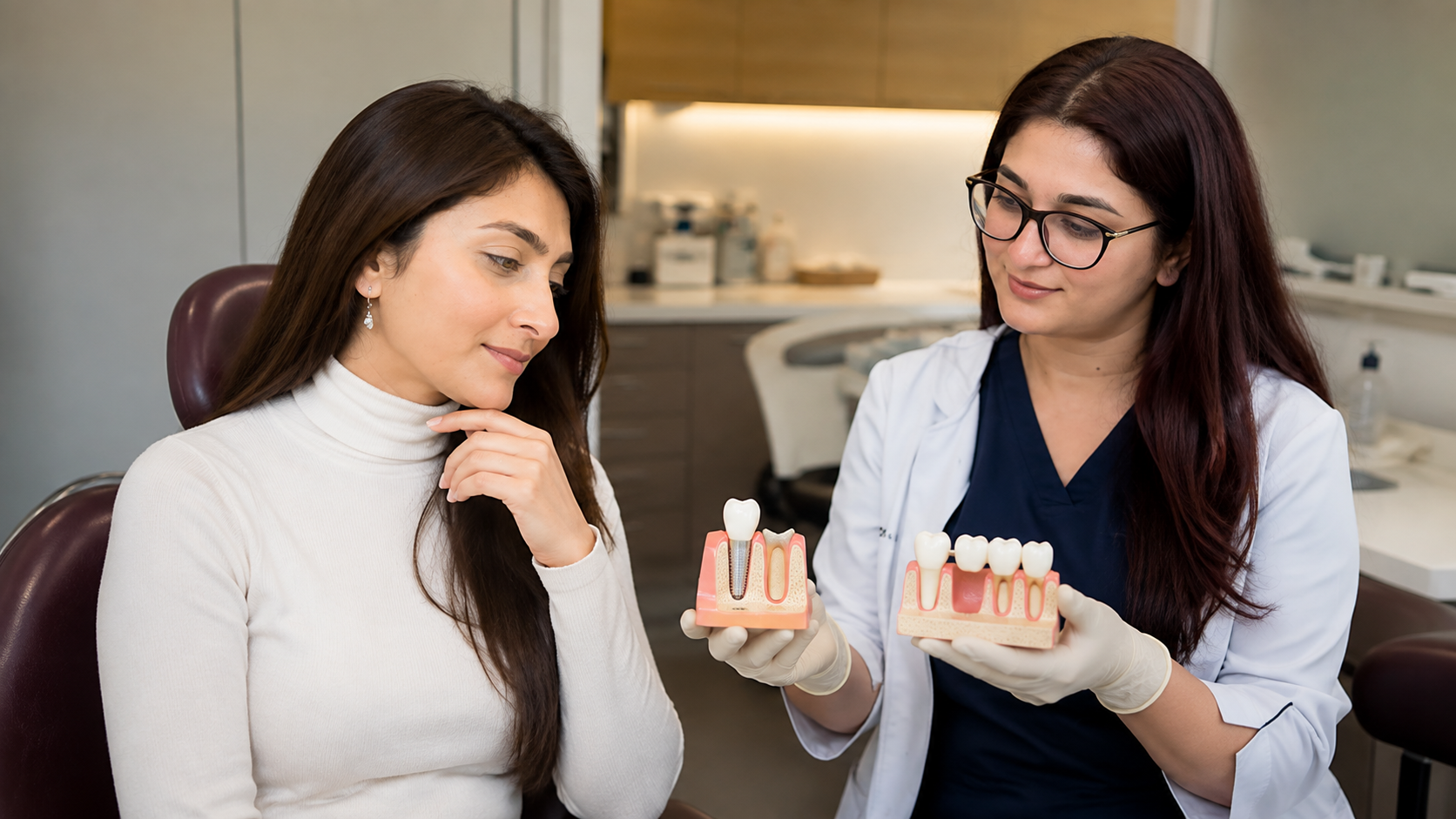
Dental Implants vs. Dental Bridges: Which Is Better…
A dental implant replaces the entire tooth, including the root, and typically lasts decades with […]
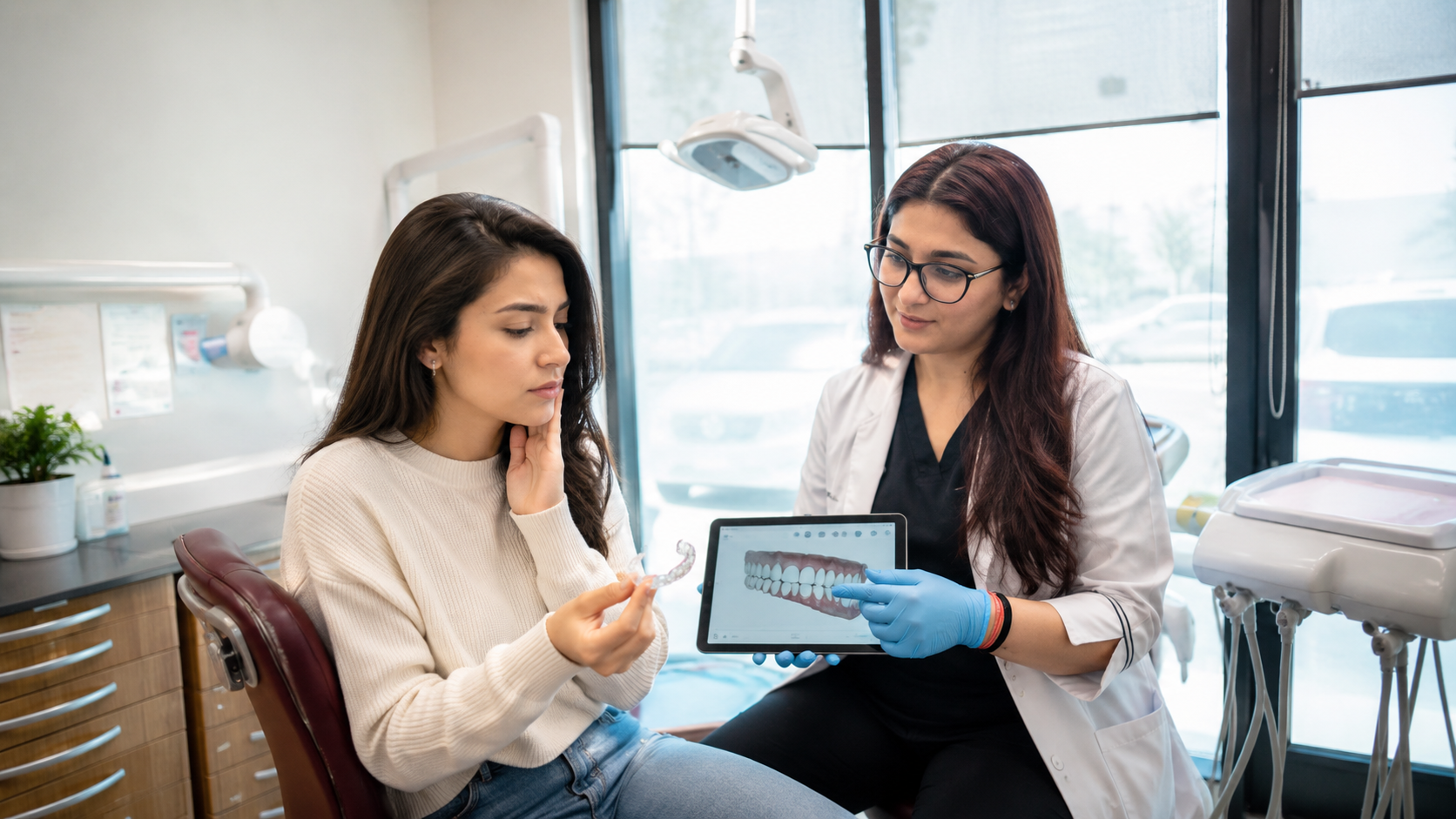
What Happens If You Don’t Wear Your Invisalign…
Invisalign aligners are designed to be worn 20 to 22 hours a day, and falling […]