
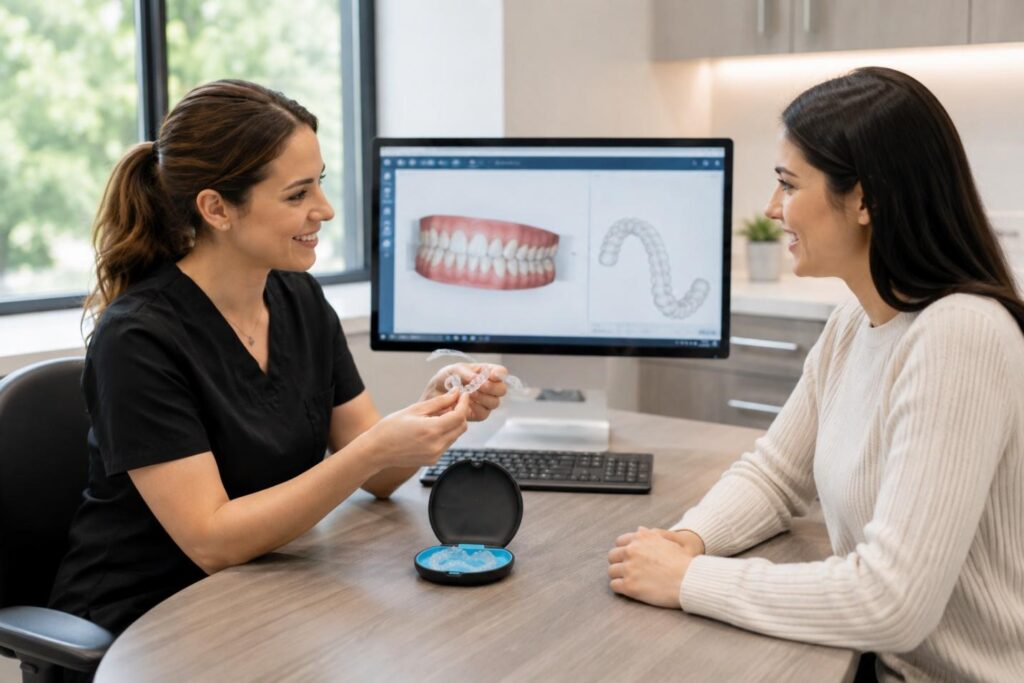

Invisalign in North York, ON typically costs between $3,000 and $8,500 CAD depending on case complexity, with treatment lasting roughly 6 to 18 months for most teens and adults. Clear aligners straighten teeth discreetly using a series of custom trays instead of metal brackets. Treeline Dental’s Invisalign team evaluates your bite and smile goals to confirm candidacy. Contact Treeline Dental to book your Invisalign consultation.

What Is Invisalign and How Does It Work?

Invisalign is a clear aligner system that gradually shifts your teeth into a straighter position using a series of custom, removable trays, rather than the fixed brackets and wires used in traditional braces. Each set of aligners is worn for one to two weeks before moving on to the next in the series, with small, planned movements that add up to a fully straightened smile over the course of treatment. Because the trays are clear and removable, Invisalign has become a popular alternative to metal orthodontics for adults and image-conscious teens in North York.

Each aligner is manufactured from your digital treatment plan using a 3D printing process, so every tray in the series is precisely calibrated to move your teeth a fraction of a millimetre closer to their final position. This staged approach is what allows Invisalign to handle a wide range of alignment issues while keeping each individual tray comfortable to wear.

Invisalign Cost in North York, ON: What to Expect

Invisalign pricing in North York, ON generally falls between $3,000 and $8,500 CAD, depending on how complex your case is:

  • Mild cases (minor spacing or crowding): roughly $3,500 to $5,500
  • Moderate cases (moderate crowding or bite correction): roughly $5,500 to $7,500
  • Complex cases (significant bite issues): roughly $7,500 to $8,500 or more

A few factors move the price within that range: how many aligners your treatment plan requires, whether additional refinement trays are needed partway through, and whether retainers are included at the end of treatment. Many dental insurance plans cover up to 50% of Invisalign costs, and some cover the full amount depending on your policy. Flexible spending accounts and in-house payment plans are also common ways patients manage the cost.

How Long Does Invisalign Treatment Take?

Most Invisalign treatment plans take between 6 and 18 months, though mild cases can finish faster and complex bite corrections can take longer. You will typically check in with your dentist every 6 to 8 weeks to confirm your teeth are tracking with the plan and to pick up your next set of trays. Treatment speed depends heavily on compliance: aligners need to be worn 20 to 22 hours a day to stay on schedule, with removal generally limited to eating, drinking, and brushing.

Is Invisalign Covered by Insurance?

Many extended health plans include orthodontic coverage that applies to Invisalign the same way it would to traditional braces, often covering up to half the total cost. Coverage amounts and lifetime maximums vary widely by provider, so our team can help you check your specific benefits and outline a payment plan for whatever your insurance does not cover.

Invisalign vs Traditional Braces: Which Is Right for You?

Both Invisalign and traditional braces move teeth effectively, but they suit different priorities. Invisalign trays are clear, removable, and generally more comfortable day to day, which makes them appealing for adults and teens who want a discreet option and are disciplined about wearing them consistently. Traditional braces stay on your teeth around the clock, which can make them a better fit for more severe bite corrections or for patients who may not reliably wear removable aligners as directed. During your consultation, your dentist will walk you through both Invisalign and traditional orthodontics options based on your specific bite and goals.

Who Is a Good Candidate for Invisalign in North York, ON?

Invisalign works well for a wide range of mild to moderate alignment issues, including:

  • Crowded or overlapping teeth
  • Gaps or spacing between teeth
  • Mild to moderate overbite, underbite, or crossbite
  • Relapse after previous orthodontic treatment

Good candidates also need to be genuinely willing to wear their aligners for the recommended 20 to 22 hours a day, since inconsistent wear is the most common reason treatment takes longer than planned. Severe skeletal bite discrepancies may be better suited to traditional orthodontics or a combination approach, which your dentist can confirm during your consultation.

Some cases also use small, tooth-coloured attachments bonded temporarily to certain teeth, giving the aligners extra grip to perform more complex movements like rotating a tooth or shifting its root position. These attachments are barely noticeable and are removed once treatment is complete, and not every case needs them. Whether your plan requires attachments, and how many, is determined during your digital scan and treatment planning stage, not guessed at upfront.

What Happens During an Invisalign Consultation?

Your Invisalign consultation starts with a full evaluation of your teeth, gums, and bite, similar to what is covered in a new patient dental exam. From there, your dentist takes a digital scan of your teeth, which is used to map out your entire treatment plan and show you a preview of your projected results before you commit to treatment.

Modern digital scanning has largely replaced the messy putty impressions once used for orthodontic planning. A handheld scanner captures a precise 3D model of your teeth in a few minutes, which is more comfortable for patients and gives your dentist a highly accurate model to plan tooth movements down to fractions of a millimetre. That same digital model is what generates the simulated preview of your future smile, so you can see roughly where your teeth are headed before your first tray is ever made.

Retainers After Invisalign: Protecting Your Results

Teeth naturally want to drift back toward their original position after any orthodontic treatment, which is why a retainer is a non-negotiable last step of Invisalign, not an optional extra. Most patients wear a retainer full-time for a period after their final aligner, then shift to nights only for long-term maintenance. Skipping retainer wear is one of the most common reasons people see their teeth shift back over the following years, effectively undoing months of treatment. Your dentist will fit your retainer at your final Invisalign appointment and explain a realistic long-term wear schedule based on your case.

Caring for Your Smile During Invisalign Treatment

Good oral hygiene matters even more during Invisalign treatment, since plaque can get trapped between your teeth and the aligner trays if they are not cleaned properly. Sticking to your regular dental hygiene cleaning schedule during treatment helps prevent staining and cavities under the trays. Once treatment is complete, wearing your retainer as directed protects your results, and if any teeth need additional restorative work, our restorative dentistry and crowns and bridges services can help finish your smile.

Life With Invisalign: Eating, Talking, and Daily Habits

Because Invisalign trays are removable, you can eat and drink whatever you like, as long as the aligners come out first; this is one of the most common reasons patients prefer it over fixed braces, which restrict certain foods entirely. Most patients adjust to speaking with aligners in within a few days, and any temporary lisp typically fades quickly. Brushing and flossing stay straightforward too, since there are no brackets or wires to navigate around, though the trays themselves need to be rinsed and brushed at every removal to avoid a buildup of bacteria or odour.

Invisalign for Teens vs Adults in North York, ON

Invisalign works for both teens and adults, though the considerations differ slightly. Teen-specific aligner systems include compliance indicators that fade with wear time, helping parents and dentists confirm aligners are actually being worn as directed, alongside eruption tabs that account for teeth still coming in. Adult patients are often motivated by wanting a discreet option for work or social settings, and adult cases sometimes involve additional considerations like previous orthodontic relapse or existing restorative work such as crowns and bridges that need to be factored into the treatment plan.

How Much Do Traditional Braces Cost by Comparison

For context, traditional metal braces in the North York and greater Toronto area typically run $3,000 to $7,000, ceramic braces $5,000 to $8,000, and lingual braces (mounted behind the teeth) $8,000 to $10,000. Invisalign’s $3,000 to $8,500 range sits comparably to metal and ceramic braces for many cases, which is part of why it has become such a common alternative rather than a premium upgrade. Your dentist can give you a like-for-like comparison once your bite has been evaluated, since the right option depends on what your teeth actually need corrected.

Invisalign in North York, ON: Why Patients Choose Treeline Dental

Treeline Dental’s North York team, led by Dr. Kreena Patel, takes a thorough approach to Invisalign planning, mapping out your full treatment before you start rather than adjusting course as you go. We explain your cost, timeline, and expected results clearly at your consultation so you can decide with confidence, and we stay involved throughout treatment to make sure your teeth are tracking with the plan.

Contact Treeline Dental to book your Invisalign consultation in North York, ON today.

How to Choose a Family Dentist in North York: What to Look For

How to Choose a Family Dentist in North…

Choosing a family dentist comes down to a few practical factors: whether the practice treats […]
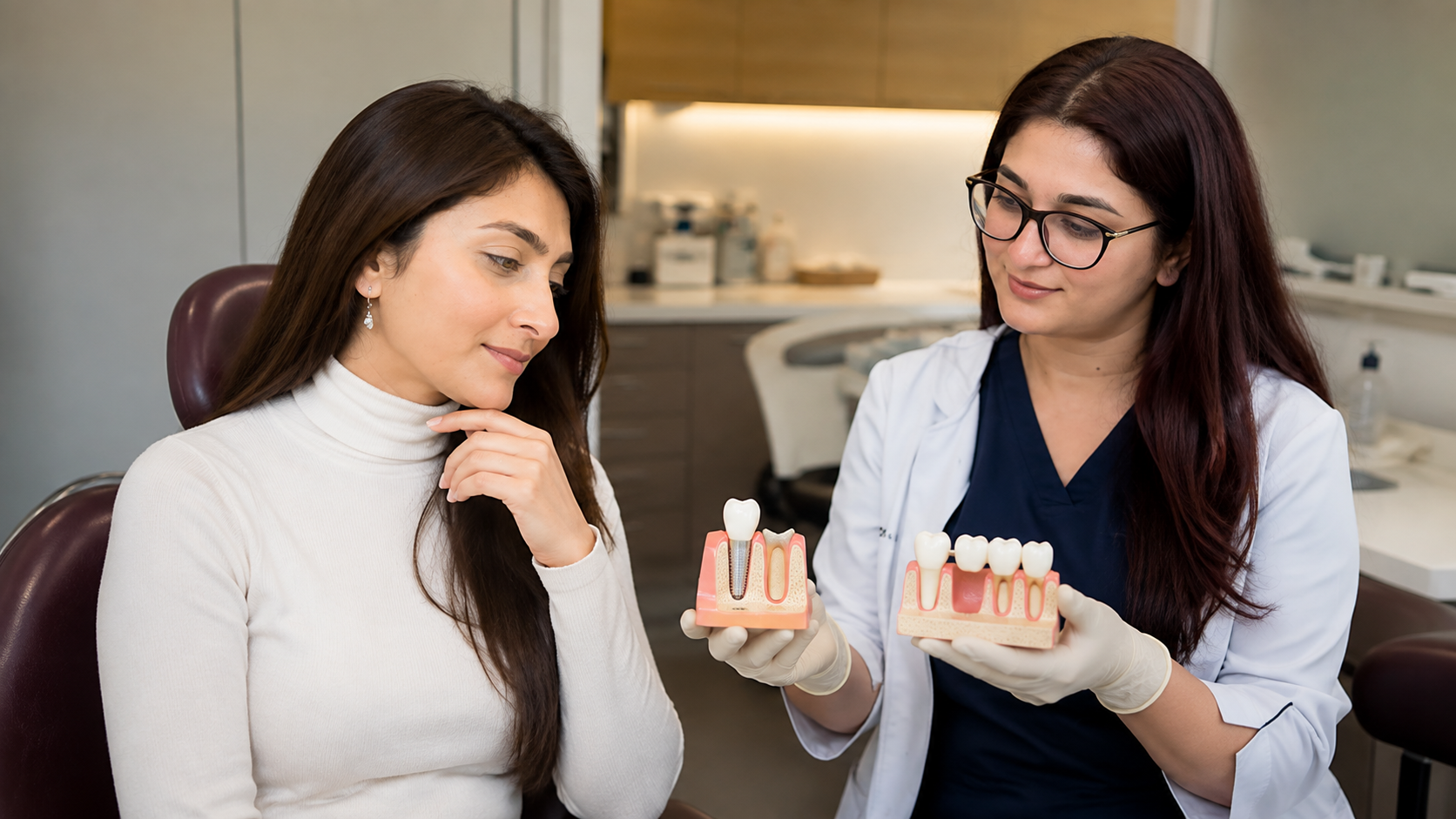
Dental Implants vs. Dental Bridges: Which Is Better for a Missing Tooth?

Dental Implants vs. Dental Bridges: Which Is Better…

A dental implant replaces the entire tooth, including the root, and typically lasts decades with […]
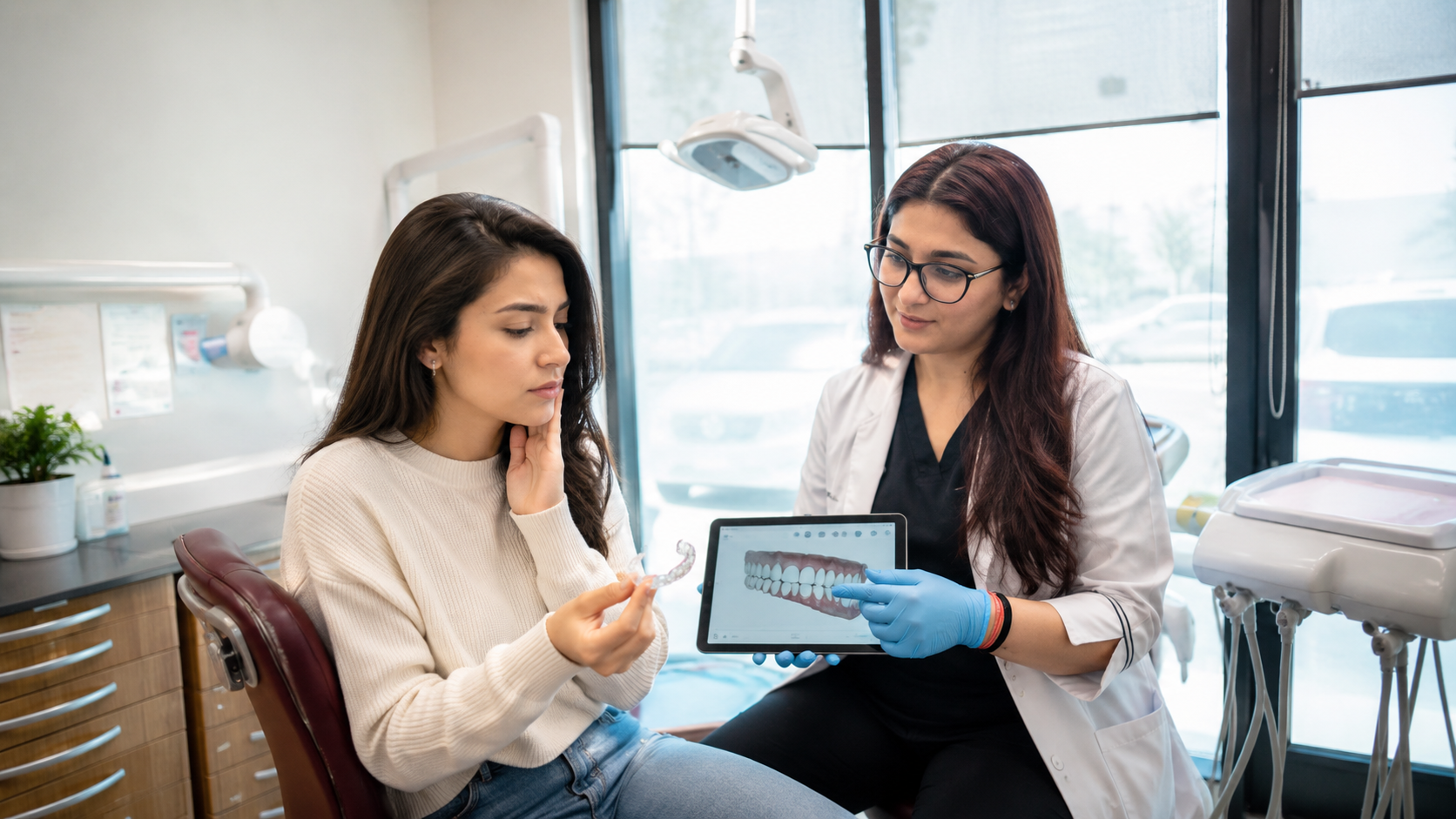
What Happens If You Don’t Wear Your Invisalign Aligners Enough?

What Happens If You Don’t Wear Your Invisalign…

Invisalign aligners are designed to be worn 20 to 22 hours a day, and falling […]